ShavingJune 19, 2026· Guinevere H5 min read
Should You Exfoliate Before or After Shaving? Expert Tips for Women

Smooth, glowing skin, it’s what women want. Especially after a shave! But when it comes to that coveted silky softness, we often hear the same question: should you exfoliate before or after shaving? Exfoliation removes dead skin cells, buffs away dullness, and paves the way for your skin to better absorb the nutrients from skincare products. So, sit down, relax, and get ready: we’re going to answer that pressing question so you can get the smooth skin you deserve. We’re going to walk you through the benefits of each and give some killer tips on the best way to exfoliate.
Pre-Shave Exfoliation Benefits
Let’s start with the “before” camp. Here are the benefits of a pre-shave treatment:
- Smoother shaving surface: by removing dry and scaly skin, you’re smoothing the path for your razor. Smooth skin means less nicks and bumps while granting a closer, more comfortable shave.
- Prevents ingrown hairs: also tied to a smoother shaving surface, exfoliating before a shave gives your razor better access to each hair and helps clear the way for hair regrowth. This prevents one of the most uncomfortable yet common side effects of shaving.
- Improved Razor Performance: A smooth shave isn’t just better for you, it’s better for your razor. Without the excess debris, your blades won’t clog up as easily, so you have a longer-lasting blade.
How to Exfoliate Before Shaving

- Choose an exfoliating product that works for your skin. Sensitive skins prefer gentle enzymatic exfoliants, while oily skins work better with salicylic acid-containing scrubs.
- Take a warm shower or bath, and wet your skin to soften it.
- Apply your chosen exfoliant with gentle, circular motions; focus on areas where hair grows.
- Rinse thoroughly with warm water; ensure there’s no reside from your exfoliant.
- Pat your skin dry and start your shaving routine.
We’ve looked at one side of the coin, now let’s flip it. Here is why some women prefer exfoliating after their shave:
- Calm Irritated skin: exfoliating can help soothe skin prone to redness and irritation after a shave. You’ll want an exfoliant with calming ingredients like chamomile.
- Encourage cell turnover: this can help promote skin healing, especially in areas where you are prone to nicks.
- Prolong time Between Shave: Exfoliating helps you maintain a smooth skin surface and clears the path for regrowth to help keep ingrown hairs at bay. For some women, this also equals more time without needing to shave.
How to Exfoliate After Shaving
- Don’t exfoliate immediately; give our skin 48 hours.
- Choose a gentle exfoliator and avoid harsh chemical scrubs.
- Apply with soft, circular motions.
- Rinse with lukewarm water.
- Follow up with soothing, hydrating skincare products.
Common Exfoliating Mistakes to Avoid

“Before or After” isn’t the only question when it comes to exfoliating. You want what’s best for your skin, of course, but the alternative isn’t “good but not great.” You can damage your skin through improper exfoliating. So let’s go over a few common mistakes to help protect your silky smooth self-care.
- Over-Exfoliating: scrubbing too hard or too frequently can damage your newer layer of skin, and harsh products can irritate it. Aim for once or twice a week, and find a gentle scrub that complements your skin type.
- Using Expired Products: Expired exfoliants can be less-effective at best, and damaging at worse. Keep an eye on expiration dates and dispose of products past their prime. Once you have a feel for your exfoliating schedule, you can better determine how much to buy.
- Neglecting to Moisturize: exfoliating removes dry, icky skin, so moisturizing isn’t exactly everyone’s first thought. But revealing that fresh layer of skin also makes it vulnerable to damage and drying out. Moisturize it to protect it’s freshness, especially if you opt for post-shave.
Choosing the right product depends largely on your skin and personal preference. The market is flooded with options, each carrying their own benefits. Let’s take a look.
Physical Exfoliants
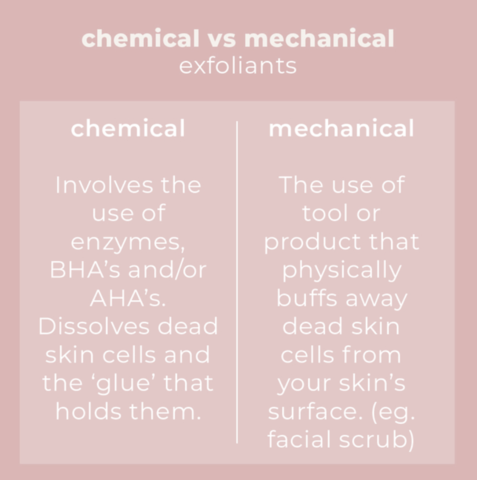
A physical exfoliant uses small particles or gritty surfaces to manually remove skin cells. These include products like sugar scrubs, salt scrubs, coffee scrubs, baking soda, pumice stones, cleansing brushes, and exfoliation gloves.
Coffee scrubs can rejuvenate your skin and boost circulation, while sugar scrubs offer a more gentle experience. Salt holds many minerals that are beneficial to skin, but can be too harsh after a shave. Baking soda is a DIY favorite for gentle treatment, but it has a high pH balance that can disrupt your skin’s balance. Tools instead of scrubs have neither nutrients or irritants and strictly get the job done.
Enzymatic Exfoliants
Fruits and other items contain enzymes that can dissolve and remove dead skin cells without the trouble of scrubbing (let along finding a physical exfoliant that feels comfortable). These scrubs are usually made with papaya or pineapple. Both are rich in bromelain to break down and soften the proteins holding the dead skin in place.
Chemical Exfoliants
Tailored exfoliants can help specific skin types achieve a better exfoliation. Alpha Hydroxy Acids like lactic acid, for example, help dry and sensitive skin endure and provide extra hydration for the new skin. Beta Hydroxy acids like salicylic acid penetrate deeper into pores, so their great for oily or acne-prone skin. Then you have retinoids, derived from Vitamin A. These promote cell turn over, but they can cause irritation.
Finding the Right BalanceRemember our initial question? Here’s the answer: it depends on what you like and what your skin needs. You need to try both to see what works best; you might even try a few times while finding the right exfoliant! Some skins need aftercare to recover from shaving; others need preparation to endure. No one knows your skin as intimately as you do.

Whether you choose to exfoliate before or after a shave, the goal is to find the routine that leaves your skin looking and feeling its best: smooth, fresh, and radiant.
- #Shaving