Body CareJune 17, 2026· The Sisterhood6 min read
How to Sugar Bikini Area: Safe Guide
Sugaring the bikini area removes hair from the root using a warm sugar-lemon-water paste applied against the grain and removed with the grain. Expect around three weeks of results with proper prep, technique, and aftercare.
The short answer
Sugaring the bikini area means applying a warm sugar-lemon-water paste against the direction of hair growth, then flicking it off in the direction of growth to pull hair from the root. Prep skin with a 24-hour-prior exfoliation, trim hair to roughly 6 mm (¼ inch), work in small sections, and follow with 48 hours of gentle aftercare. Expect results to last around three weeks.
What sugaring actually is, and why the bikini area is a common use case
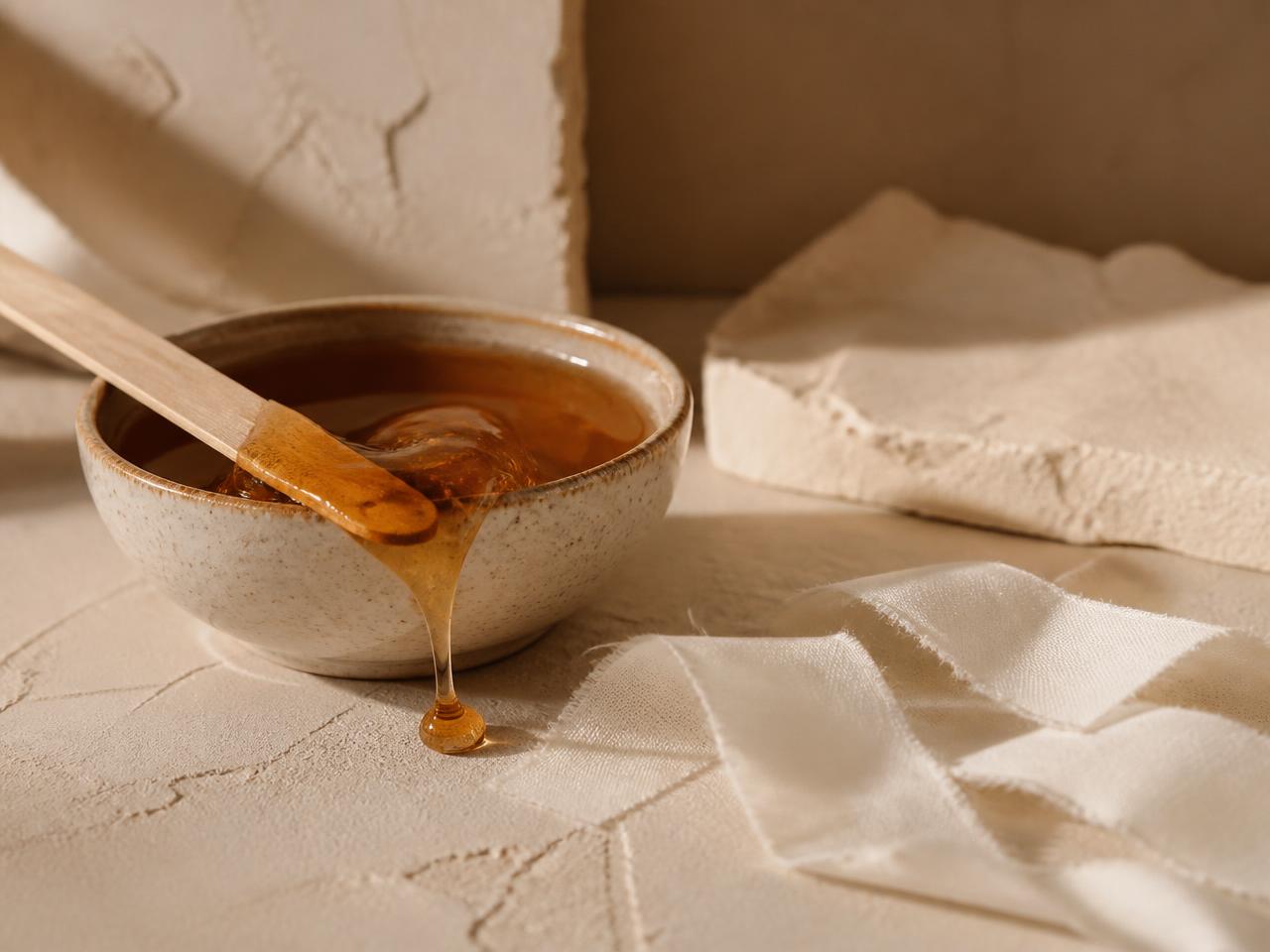
Sugaring is a hair-removal method that uses a paste made from sugar, water, and lemon juice. Applied at a lukewarm temperature, it's pressed against the skin in the opposite direction of hair growth, which helps the paste work its way around the hair shaft down toward the root, then removed with a quick flick in the natural growth direction.
The key mechanical difference from waxing: because the paste is removed with the direction of growth rather than against it, the hair is pulled along its natural exit path rather than at a sharp angle. According to Cleveland Clinic, this alignment with the follicle's natural direction may cause less additional skin-cell removal compared to waxing, and may reduce the tendency for hairs to snap and curl back into the skin.
For the bikini area specifically, that matters. The pubic zone has coarser, curlier hair and thinner, more sensitive skin than the legs. According to DermNet NZ, when a cut or pulled hair is left with a sharp, pointed end, especially a curly one, it can re-enter the follicle (a process called transfollicular penetration) and trigger the inflammatory response we know as an ingrown hair or razor bump. Removing the hair cleanly from the root, in the growth direction, reduces that particular risk.
That said, sugaring is not entirely without risk. Cleveland Clinic notes that those with coarse, curly hair on skin-fold areas, like the bikini line, still face an elevated ingrown hair risk because hairs in that zone can grow in multiple directions. Technique matters considerably.
For a complete overview of the sugaring method across all body areas, see the guide to sugaring at home.
Before you start: what you need
- Sugar paste, store-bought or DIY (equal parts sugar, lemon juice, and water, cooked to a soft-ball stage). Ready-made pastes maintain more consistent temperature than homemade.
- Cornstarch or talc-free powder, to dust the skin dry before application
- Clean spatula or your fingers, spatula for first-timers; experienced sugaring users often use their fingers directly
- A mirror and good lighting, essential for working a hard-to-see area safely
- Aloe vera gel or fragrance-free moisturizer, for aftercare
- A warm damp cloth, to remove residue
Hair length matters: aim for roughly 6 mm (¼ inch). Too short and the paste won't grip; too long and it's more painful to remove.
Step-by-step: how to sugar the bikini area
1. Exfoliate the day before
Use a gentle, fragrance-free exfoliating scrub on the bikini area 24 hours before your session, not the same day. This lifts dead skin cells that can otherwise block the paste from reaching the hair shaft. The NHS recommends exfoliating products to help release trapped hairs; doing it ahead of removal means skin has time to settle before you apply anything else.
Skip scrubs, AHAs, or retinoids in the 24–48 hours after your session. Exfoliation on freshly treated skin increases sensitivity and can cause irritation.
2. Patch-test if this is your first time
Apply a small amount of the paste to the inner arm for several minutes before using it on your bikini area. The bikini line is a high-sensitivity zone, confirming your skin doesn't react unusually to the ingredients first is a sensible precaution.
3. Cleanse and dry the area completely
Moisture is the enemy of good adherence. Wash and pat the bikini area dry, then dust lightly with cornstarch or powder. Even a small amount of moisture or body oil will prevent the paste from gripping properly.
4. Check the paste temperature
The paste should be lukewarm, comfortable against the inner wrist, not hot. Unlike wax, which is heated significantly, sugar paste works at a low temperature, which reduces the burn risk. If you've warmed your paste and it feels hot on your wrist, let it cool before proceeding.
5. Apply against the direction of hair growth
Using a spatula (or your fingers), apply a thin layer of paste in the opposite direction to hair growth. Press firmly so the paste makes contact with the hair shaft down toward the root. Work in small sections, roughly a few centimetres at a time, rather than spreading the paste over a large area at once.
For most people, bikini-line hair grows downward and inward. The paste goes on traveling upward and outward.
6. Hold taut and flick in the direction of growth
This is the most technique-sensitive step. Use one hand to hold the skin taut (critical, loose skin makes removal both more painful and less effective). With the other hand, grip the edge of the paste and flick it off quickly, parallel to the skin and in the direction hair grows. A slow pull or an upward-angle pull is more likely to break the hair at the surface rather than removing it from the root.
Work your way around the bikini line one small section at a time. Resist the temptation to go over the same area twice in the same session, this increases the risk of skin irritation and superficial abrasion.
7. Remove residue and cool the skin
Wipe away any remaining paste with a warm, damp cloth. Follow immediately with a fragrance-free moisturizer or plain aloe vera gel. Aloe's mild anti-inflammatory properties may help settle the skin's surface response to removal.
Aftercare: what the next 48 hours look like
Some redness and mild sensitivity in the 12–24 hours after sugaring the bikini area is normal. The skin has been mechanically stressed. A few rules that help the skin settle:
Avoid for 24–48 hours:
- Hot baths or steam rooms
- Tight synthetic underwear or leggings (friction on just-treated skin)
- Active exfoliants, acids, or retinoids
- Scented body washes or lotions on the area
Do:
- Keep the area clean and lightly moisturized
- Wear breathable cotton
- If you experience discomfort, over-the-counter ibuprofen or paracetamol may ease it (Cleveland Clinic notes both are appropriate for post-sugaring soreness)
After the first few days, resume gentle exfoliation (2–3 times per week) to prevent ingrown hairs during the regrowth period. This is when you're most likely to see trapped hairs, gentle mechanical exfoliation keeps the follicle exit clear.
When to skip sugaring (and what to do instead)
Cleveland Clinic identifies several situations where sugaring, and most hair-removal methods, carry extra risk:
- Active skin inflammation or infection in the area, wait until fully resolved
- Sunburned skin, leave at least a few days for the skin to recover
- During or immediately after isotretinoin (Accutane) treatment, Cleveland Clinic recommends waiting at least six months after completing a course before sugaring
- If you're using tretinoin or a similar topical retinoid, pause it for a few days before a session
If your skin is frequently reactive, sensitive, or prone to post-inflammatory hyperpigmentation, sugaring may not be the most comfortable regular routine. In that case, a sharp safety razor with a quality shave gel is often gentler for day-to-day maintenance, the blade removes the hair at the surface rather than pulling from the root, which reduces the inflammatory response overall.
For a full breakdown of how to approach different zones by body area, the Freya shaving by body area guide covers technique by zone, including the pubic area, inner thigh, and bikini line.
Sugaring vs. a safety razor: which suits your routine?
Sugaring lasts longer between sessions, roughly three weeks versus the 2–4 days between shaves, but it requires more preparation, a more specific technique, and a recovery window. It also involves a real pulling sensation that some find uncomfortable, particularly on the first few sessions.
A safety razor used with correct technique, sharp blade, warm prep, with-grain strokes, no repeated passes, is a lower-barrier daily or every-few-days option. The Freya starter kit is designed specifically for the bikini line and sensitive body areas: a weighted handle gives more control with less pressure, and the single-blade design reduces the mechanical drag that tends to cause razor burn on coarser pubic hair.
The honest summary: sugaring and shaving serve different needs. If you want root-removal and extended smoothness and you're willing to invest in technique, sugaring is a solid method. If you want something reliable and repeatable with minimal prep, a quality safety razor is the more consistent daily option.
Many people use both at different times, sugaring for events or holidays, a safety razor for maintenance in between.
Sources: Cleveland Clinic (my.clevelandclinic.org), NHS (nhs.uk), and DermNet NZ (dermnetnz.org).
Frequently asked
How long does hair need to be before you can sugar?
Roughly 6 mm (¼ inch), about the length of a grain of rice. If hair is shorter, the paste won't grip it effectively. If it's much longer, trimming first makes the process more comfortable.
Does sugaring the bikini area hurt?
It involves pulling hair from the root, so there is a sensation. Most people describe the bikini line as one of the more sensitive areas. Working in small sections, holding the skin taut, and making sure the flick is fast and parallel to the skin (not at an upward angle) all reduce discomfort.
Can sugaring cause ingrown hairs?
It can, particularly on the bikini line where hair grows in multiple directions and the hair is coarser and curlier. However, because sugaring removes hair in the direction of growth, it may carry a lower inherent risk of ingrown hair formation than waxing for many people. Regular gentle exfoliation during regrowth is the most reliable way to keep follicles clear, per DermNet NZ, dead-skin buildup is one of the primary causes of ingrown hairs.
How often should you sugar the bikini area?
Results typically last around three weeks (Cleveland Clinic). Most people find a 3–5 week cycle works well once they establish a routine, this also allows the hair to grow back to the minimum length needed for effective removal.
Is sugaring safe during pregnancy?
The ingredients in sugar paste are generally considered safe topically, but the bikini area is more sensitive during pregnancy due to increased blood flow and skin sensitivity. Anyone who is pregnant should consult their midwife or GP before any hair-removal treatment in the pubic area. This answer does not constitute medical advice.
Sources & citations
- Cleveland Clinic, What Is Sugaring?: Sugaring mechanism, paste temperature, aftercare guidance including OTC pain relief; elevated ingrown hair risk for coarse curly hair on skin-fold areas; 3-week result window.
- NHS, Ingrown hairs: Exfoliation timing recommendation (before hair removal to release trapped hairs); dull blade and technique as primary avoidable causes.
- DermNet NZ, Pseudofolliculitis barbae: Transfollicular penetration mechanism, curly hair re-enters follicle after removal causing inflammation; dead-skin buildup blocks follicle exit causing ingrown hairs.